> For the complete documentation index, see [llms.txt](https://digard.gitbook.io/digard-whitepaper/llms.txt). Markdown versions of documentation pages are available by appending `.md` to page URLs; this page is available as [Markdown](https://digard.gitbook.io/digard-whitepaper/why-how-and-what/why.md).
# Why
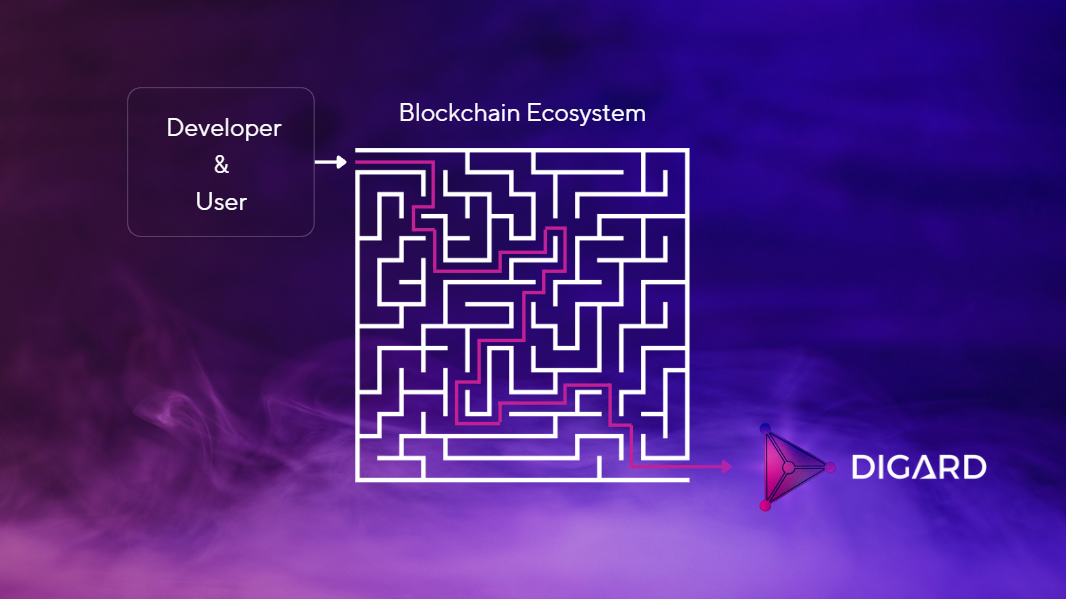
The world of blockchain is complex, fragmented, and often inaccessible to developers and users alike. Game developers struggle to integrate multi-chain capabilities, manage on-chain assets, and create user-friendly experiences. Gamers and users face steep learning curves, complicated onboarding processes, and challenges in navigating decentralized ecosystems.
At DIGARD, We believe that blockchain should power creativity, innovation, and community, not hinder them. it. Our mission is to make blockchain technology accessible to everyone, bridging the gap between Web2 and Web3. By simplifying integration, management, and onboarding, DIGARD enables developers to focus on building great products and users to enjoy seamless, decentralized experiences.We exist to unlock possibilities for developers, gamers, and communities.
### Why DIGARD?
Blockchain has enormous potential to drive innovation, but its complexity makes it inaccessible to many developers and users. **DIGARD** removes these barriers, turning blockchain into an opportunity rather than an obstacle.
**Transparency & Trust** → An immutable ledger prevents fraud and builds confidence.
**True Digital Ownership** → Users have full control over their digital assets.
**Decentralization** → DIGARD builds on blockchain to create a democratic platform where power is distributed among developers, users, and the community.
**Interoperability & Scalability** → DIGARD enables multi chain communication, allowing projects to seamlessly interact across blockchain networks.
**Sustainable Incentives & Monetization** → Tokenized economies enable sustainable revenue models through smart contracts, staking, and p2e mechanics.
**Effortless Web2 to Web3 Transition** → DIGARD provides a low barrier entry for Web2 developers and users, ensuring frictionless blockchain adoption.
**Developer-Focused Infrastructure** → DIGARD delivers modular APIs, SDKs, and automation tools to streamline blockchain development.
**Future-Proof & Scalable Solutions** → DIGARD is built for long term adaptability, enabling enterprise level adoption of blockchain.
**Community-Driven Ecosystem** → DIGARD empowers communities, fostering engagement and innovation through transparent governance and incentives.
**Sustainability & Revenue Models** → Tokenization and rewards systems foster long term economic growth.
**DIGARD** bridges Web2 and Web3, unlocking a new digital economy for developers, users, and communities.
---
# Agent Instructions
This documentation is published with GitBook. GitBook is the documentation platform designed so that both humans and AI agents can read, navigate, and reason over technical content effectively. Learn more at gitbook.com.
## Querying This Documentation
If you need additional information that is not directly available in this page, you can query the documentation by asking a question.
Perform an HTTP GET request on the following URL with the `ask` and `goal` query parameters:
```
GET https://digard.gitbook.io/digard-whitepaper/why-how-and-what/why.md?ask=&goal=
```
`ask` is the immediate question: it should be specific, self-contained, and written in natural language.
`goal` is what the user is ultimately trying to achieve, the reason they need the answer. Sharing it helps GitBook give you a better, more relevant answer. A goal is most helpful when it describes the outcome the user wants rather than restating the question. For example, with `ask=how do I create an API token`, a goal like `automate deployments from our CI pipeline` lets GitBook tailor the answer to that use case.
The response will contain a direct answer to the question and relevant excerpts and sources from the documentation.
Use this mechanism when the answer is not explicitly present in the current page, you need clarification or additional context, or you want to retrieve related documentation sections.